 Warrak Publishing
1913 — 1995
Biography
Ali Hussein Mohsen Al-Wardi was an Iraqi sociologist, historian of
social life, and public intellectual whose work helped establish modern
sociology in Iraq. Born in Kadhimiya, Baghdad,he became widely known for
explaining the gap between moral ideals and lived social behavior, and
for analyzing the long tension in Iraq between tribal patterns and urban
institutions.
Early Life
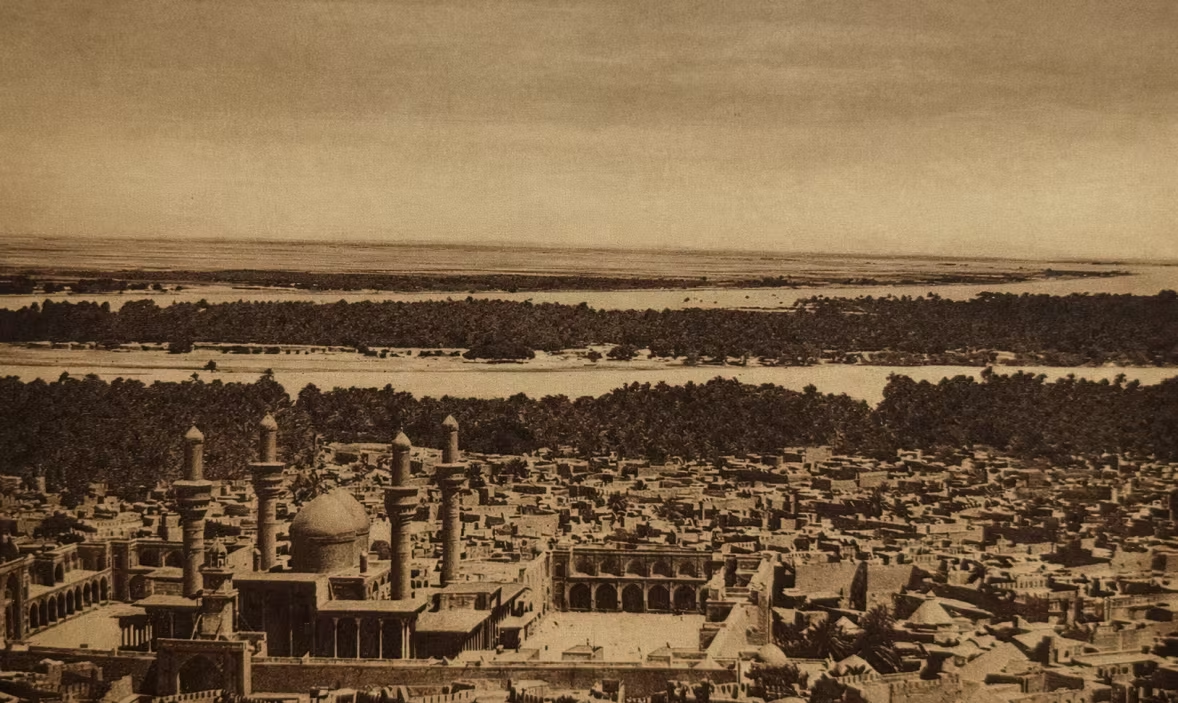
Ali Al-Wardi was born in 1913 in the district of Kadhimiya in Baghdad, at a moment when Iraq was passing from Ottoman rule into the turbulent transformations of the twentieth century. The social contrasts of the city, where religious tradition, tribal values, and emerging modern institutions existed side by side, would later become central themes in his interpretation of Iraqi society.
Raised in a modest family environment, Al-Wardi experienced early on the tensions between inherited customs and the promises of education and social mobility. These formative experiences sharpened his awareness of inequality, authority, and the gap between moral ideals and lived reality, questions that would remain at the heart of his intellectual project.
From a young age he showed a strong inclination toward reading and debate. His curiosity about how societies function, why people behave contrary to their declared beliefs, and how history shapes everyday life gradually directed him toward the study of sociology. The world into which he was born, marked by rapid political change and competing cultural loyalties, provided more than a backdrop to his childhood. It supplied the raw material from which one of Iraq’s most original social thinkers would later build his lifelong work.
Education and Formation
Ali Al-Wardi’s intellectual direction took clear shape through education. After completing his early schooling in Baghdad, he pursued higher studies at a time when modern academic disciplines were beginning to influence Arab intellectual life. Exposure to history, philosophy, and the emerging social sciences encouraged him to look beyond inherited explanations of society and toward analytical, evidence-based approaches.
A decisive stage in his formation came when he continued his studies in the United States, most notably at the University of Texas, where he earned advanced degrees in sociology. There he encountered contemporary theories, empirical research methods, and debates about modernity and social change. This experience broadened his perspective and equipped him with the scientific tools that would later distinguish his writing from the moralistic and rhetorical traditions dominant in the region.
During these years, Al-Wardi absorbed influences that would later define his method: attention to social conflict, skepticism toward idealized discourse, and sensitivity to the relationship between environment, history, and human behaviour. His academic training did not distance him from his society; instead, it provided him with new frameworks through which to interpret it.
By the time he completed his studies, the foundations of his project were in place. He had developed the intellectual independence and methodological confidence that would allow him to challenge prevailing assumptions and open new paths in Iraqi sociology.

Academic Career
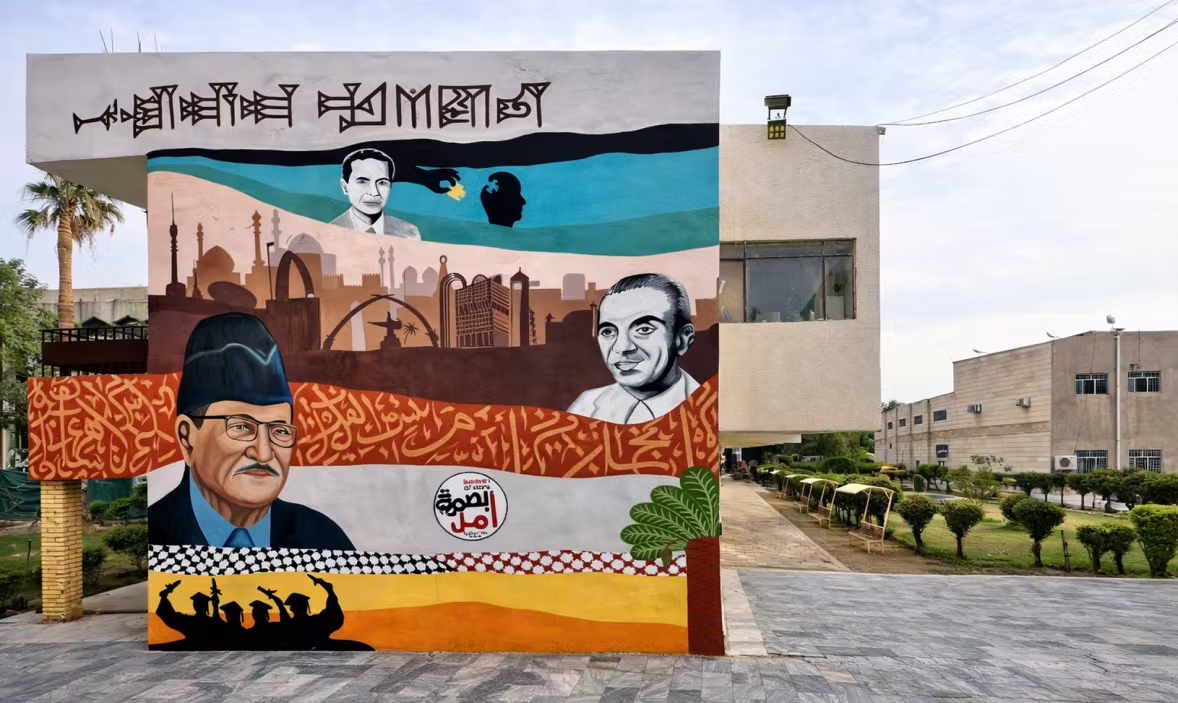
When Ali Al-Wardi returned to Iraq after completing his doctoral studies in the United States in 1950 (following an MA in Sociology at the University of Texas at Austin in 1948), he stood at the forefront of a decisive intellectual shift. He became one of the earliest scholars to establish sociology as a separate and independent discipline, distinct from literary or purely philosophical studies. This step represented a qualitative transformation in Iraqi academic life, consolidating a scientific approach grounded in social research and modern methodology, and positioning him among the pioneering founders of sociology in the Arab world.
He was appointed professor at the College of Arts at the University of Baghdad, where he would spend the core of his professional life. His academic formation had included graduating from Dar Al-Muallimeen Al-Aliya (later part of the College of Education at the University of Baghdad) and study at the American University of Beirut, experiences that helped shape the breadth of his outlook. At a moment when sociology was still consolidating its place within Iraqi higher education, he became one of the discipline’s most visible and formative figures.
Throughout the 1950s and 1960s, his lectures attracted wide attention among students for their direct language and their challenge to comfortable assumptions. He was not a conventional professor. His style was sometimes shocking, deliberately close to the language of ordinary people, and openly critical of entrenched social, religious, and political narratives. For Al-Wardi, the task of the scholar was not to justify prevailing views but to diagnose and expose contradictions through disciplined inquiry. Many who later became academics, writers, and civil servants passed through his classroom and carried aspects of his method into their own work.
His university role unfolded in parallel with an extraordinary period of publication. Beginning in the mid-1950s, his books circulated far beyond academic circles and turned him into a household name. The professor was therefore never confined to campus life; he stood at the intersection of scholarship and public debate, participating in newspapers, lectures, and cultural forums across the country.
By the time he approached retirement in the 1970s, Al-Wardi had helped define what sociology could mean in Iraq: a discipline engaged with real tensions, living communities, and the difficult questions many preferred not to ask.
Major Works
By the time he approached retirement in the 1970s, Al-Wardi had helped define what sociology could mean in Iraq: a discipline engaged with real tensions, living communities, and the difficult questions many preferred not to ask.
In 1950, the same year he returned to Iraq, he published Shakhsiyyat al-Fard al-‘Iraqi (The Personality of the Iraqi Individual), an effort to understand behaviour, values, and contradiction within the lived experience of Iraqi society.
The following year, in 1951, he issued Khawariq al-Lashu‘ur (Miracles of the Unconscious). In this study, Al-Wardi explored psychological and social dimensions of belief, approaching questions often treated through metaphysics from the perspective of modern inquiry.
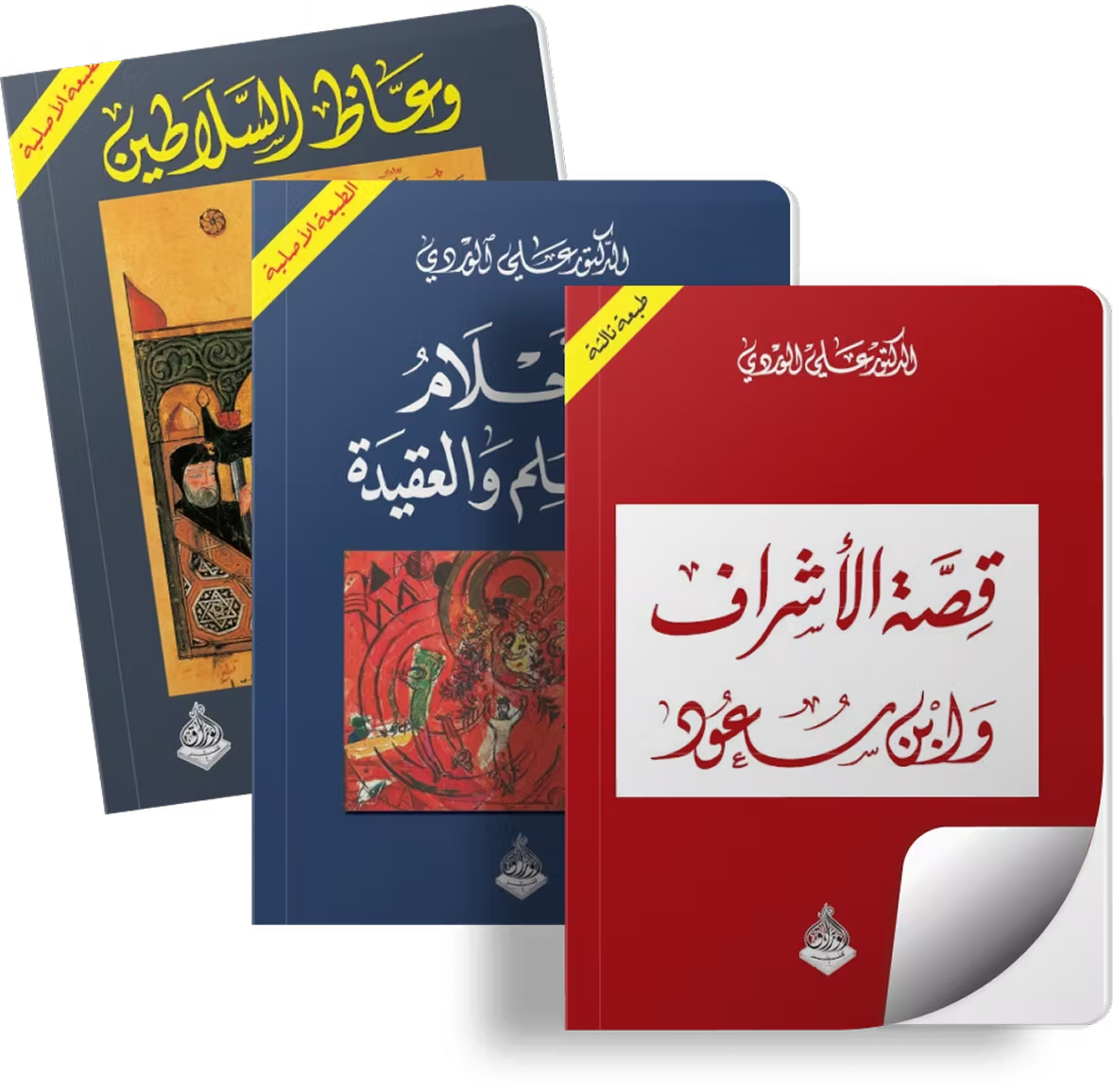
In 1954, he published Wa‘az al-Salatin ( The Sultans’ Preachers), one of his most provocative books. In it, Al-Wardi examined the relationship between power, religious discourse, and moral preaching, arguing that idealised rhetoric often masks social and political realities. The book immediately placed him at the center of national debate.
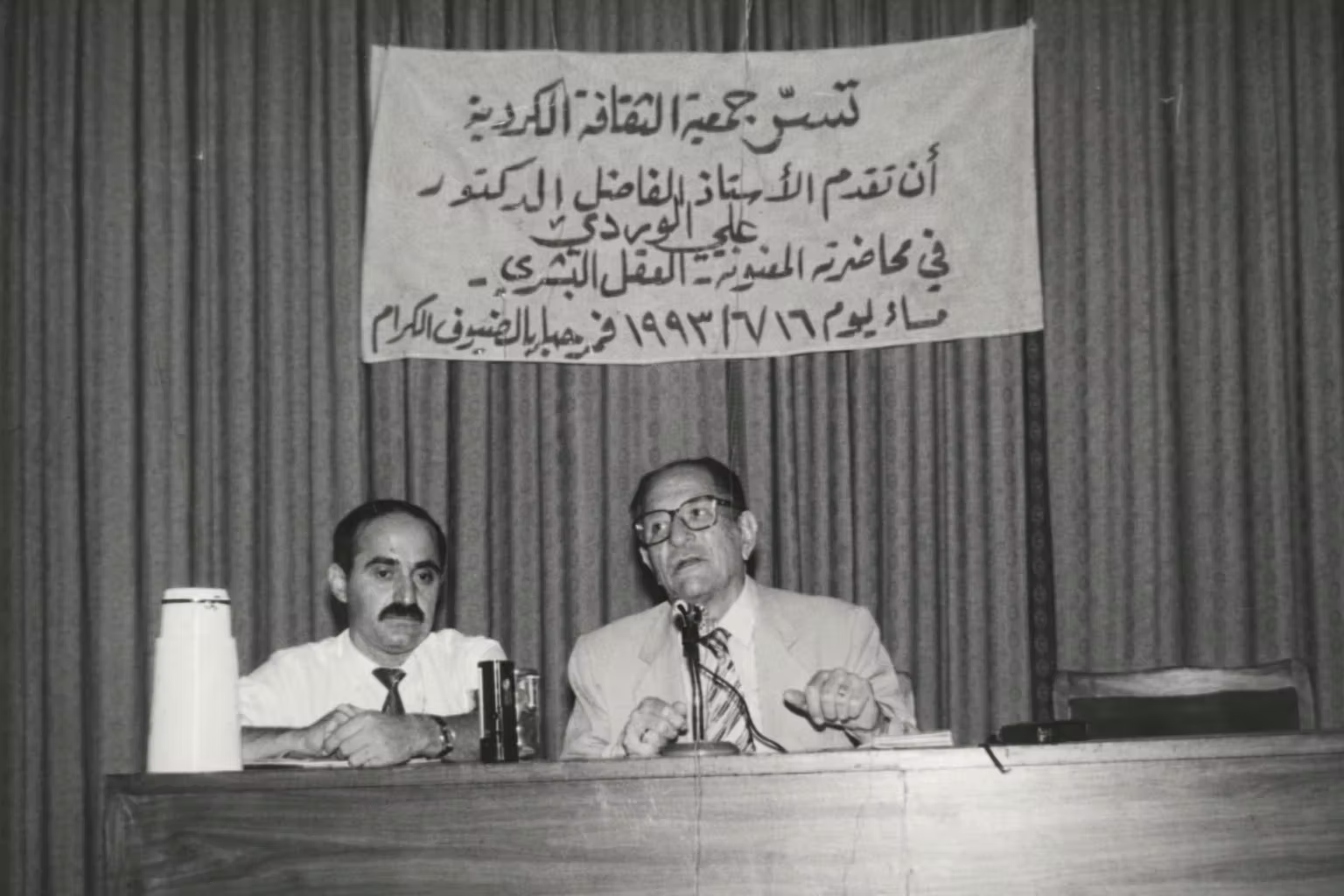
This was followed by Mahzalat al-‘Aql al-Bashari (The Comedy of the Human Mind) in 1955, a sociological analysis of Aristotelian logic and its limitations in the study of Islamic thought.
In 1957, he published Usturat al-Adab al-Rafi‘ (The Myth of High Literature), extending his critical method to cultural hierarchies and the standards through which literary value was traditionally judged.
In 1959, he released Al-Ahlam bayn al-‘Ilm wal-‘Aqida (Dreams between Science and Belief). In this book, Al-Wardi examined the powerful social influence attributed to dreams, particularly when they were treated as sacred messages or unquestionable guidance. He argued that such interpretations had shaped customs, authority, and popular behaviour, sometimes with profound consequences for collective life.
In 1962, Al-Wardi published Mantiq Ibn Khaldun (The Logic of Ibn Khaldun), a major contribution to modern readings of the classical thinker. Rather than offering praise or traditional commentary, Al-Wardi set out to analyse how Ibn Khaldun constructed his theory of society and what intellectual and social conditions made such a theory possible.
The book focused on two principal questions. First, it examined the internal logic that guided Ibn Khaldun’s reasoning, especially his departure from sermonizing and rhetorical approaches that had long dominated discussions of social life. Second, it explored the intellectual and non-intellectual factors that enabled Ibn Khaldun to produce a new science of human society.
Al-Wardi highlighted Ibn Khaldun’s insistence that society is a dynamic system of relationships and interests, constantly in motion and resistant to absolute or timeless truths. In doing so, he contrasted this view with older logical traditions that treated truth as singular and unquestionable, leaving little room for disagreement or historical change.
Through this study, Al-Wardi reaffirmed his own commitment to sociology as a discipline concerned with description and explanation rather than moral instruction. The work remains one of the most rigorous modern engagements with Ibn Khaldun in Arab scholarship.
In 1965, Al-Wardi published Dirasa fi Tabi‘at al-Mujtama‘ al-‘Iraqi (A Study of the Nature of Iraqi Society), a work widely regarded as one of his most direct statements on the structural tensions shaping Iraqi life.
The book begins from the observation that Iraq has been, since ancient times, a center of urban civilization while simultaneously remaining exposed to continuous influences from the surrounding desert. Successive waves of tribal values interacted with a deeply rooted heritage of settled, agricultural, and metropolitan culture. According to Al-Wardi, this long encounter between two contrasting systems of values produced recurring patterns of social and psychological conflict.
He argued that Iraqi society could not fully stabilize within either framework. It was neither able to detach itself from the pressures of tribal resurgence nor able to abandon the requirements imposed by urban and historical development. The result, in his view, was a condition of oscillation between competing norms, visible in behaviour, politics, and cultural life.
The book became one of the most frequently cited interpretations of Iraqi identity and remains central to discussions of social duality in the region.
From 1969 onward, Al-Wardi began releasing his monumental multi-volume series Lamhat Ijtima‘iyya min Tarikh al-‘Iraq al-Hadith (Social Glimpses from the Modern History of Iraq). Across its volumes, he brought sociology and history together to reinterpret the formation of the Iraqi state and the continuing tension between tribal traditions, urban institutions, and systems of belief. The project stands among the most ambitious works in modern Arab social thought.
Through these publications, Al-Wardi transformed sociology into a public conversation. His books reached far beyond academic audiences, ensuring lasting influence across generations.
Intellectual Project
Across his long career, Ali Al-Wardi pursued a consistent objective: to replace moral preaching and idealized self-images with the systematic study of social reality. He believed that societies should be understood as they are lived, shaped by interests, conflicts, and historical circumstances, rather than as they are imagined in slogans or ethical abstractions.
At the center of his work stood the conviction that contradiction is not an exception in human life but one of its governing principles. Individuals and communities, in his view, often profess values that differ from their actual practices. Explaining this gap required sociology, not condemnation.
Al-Wardi also sought to connect Iraq’s contemporary problems with deeper historical formations. By tracing the interaction between tribal traditions, urban institutions, and religious authority, he aimed to show how long-term structures continued to influence modern behaviour.
In doing so, he helped legitimize a style of thinking that prioritized analysis over praise, explanation over accusation, and evidence over sentiment. His project invited readers to confront uncomfortable realities while insisting that understanding them was the first step toward meaningful change.
Public Debate and Controversy
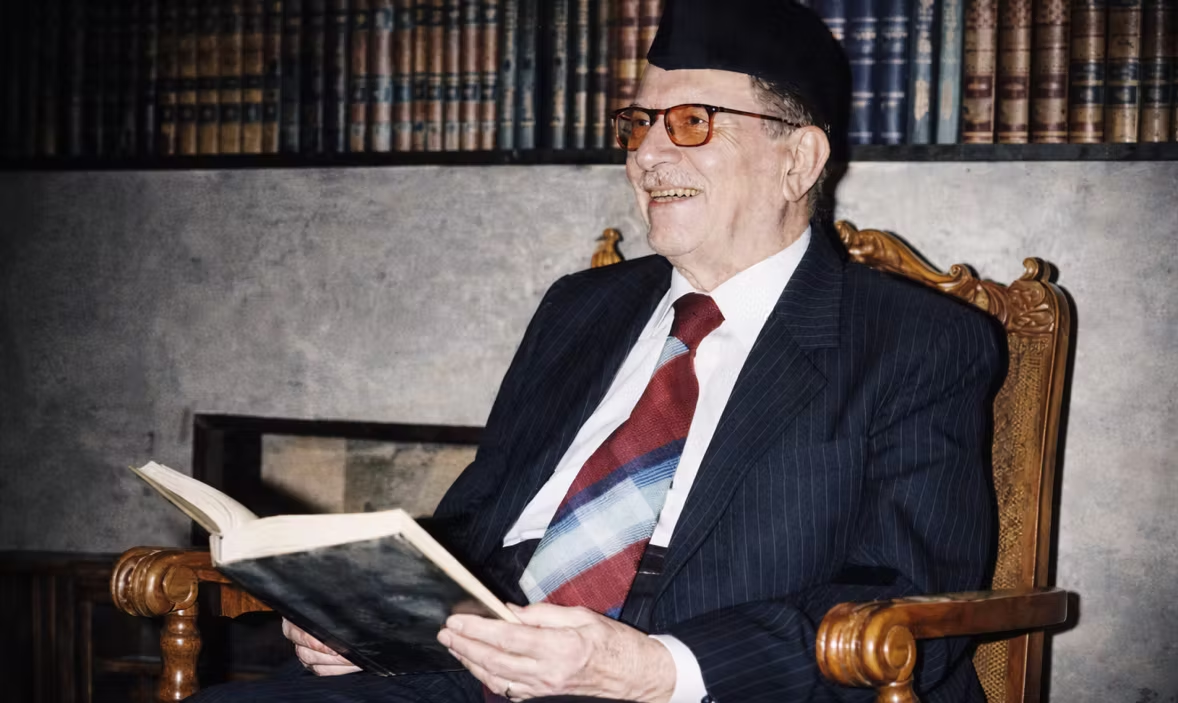
From the moment his books began to circulate widely in the 1950s, Ali Al-Wardi became a figure of continuous debate. His insistence on describing society as it functioned in practice, rather than as it appeared in moral discourse, challenged many inherited certainties. Admirers viewed this as intellectual courage. Critics saw it as provocation.
A central source of controversy lay in his rejection of purely sermonizing approaches. By arguing that social behaviour followed patterns shaped by history and environment, he appeared to some to be diminishing the role of ideal principles. Yet for Al-Wardi, this move was essential if scholarship was to produce knowledge rather than reassurance.
Religious scholars, literary figures, and political voices all entered discussions with him at different moments. Newspapers, public lectures, and cultural gatherings became arenas in which his arguments were defended, attacked, and reinterpreted. The intensity of these reactions revealed how deeply his work had penetrated public awareness.
At the same time, disagreement strengthened his visibility. Debate turned his publications into reference points, and even opponents helped confirm his position as a central participant in Iraq’s intellectual life.
Today, the controversies surrounding his writings are remembered as part of the vitality of the period, illustrating the transformative impact of a scholar who refused to separate academic inquiry from the realities of the society around him.
Legacy and Influence
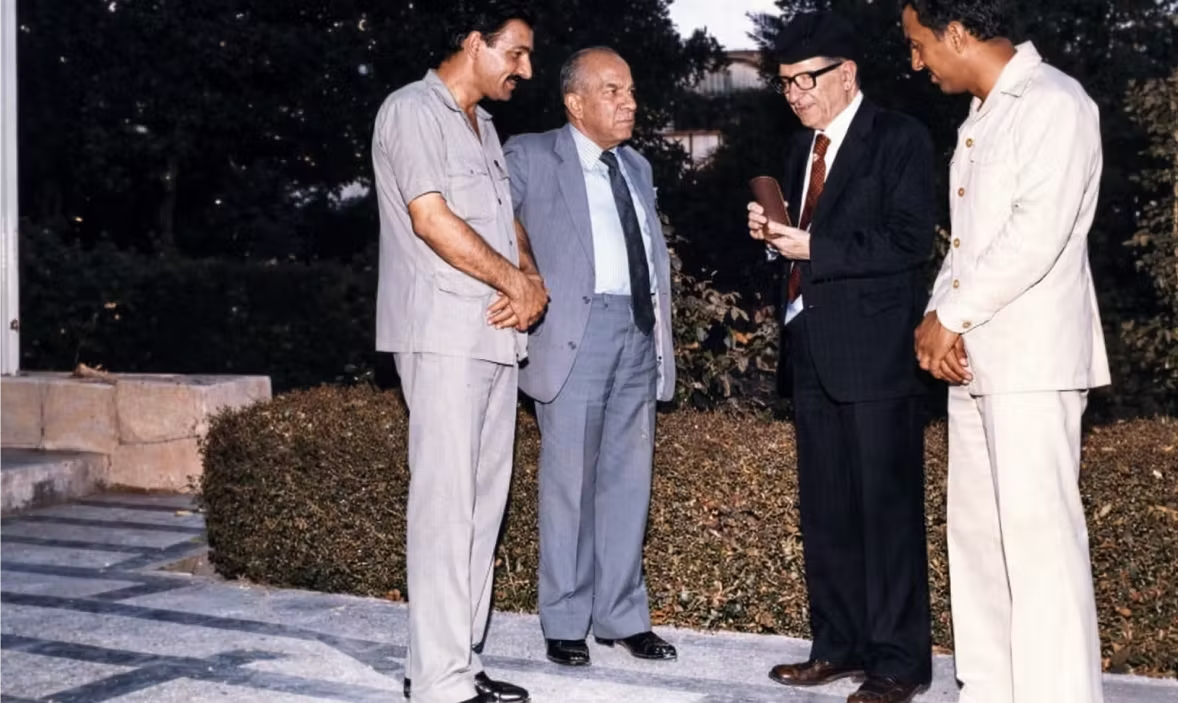
The arguments advanced by Ali Al-Wardi were new and often startling to Iraqi public opinion, and later to audiences across the Arab world. He directed attention toward subjects that had long been treated as untouchable or beyond criticism, submitting them instead to analytical and sociological examination. The conclusions he drew generated wide discussion and ensured that his works became enduring points of reference.
Al-Wardi combined a modern scientific outlook with a style of writing that was clear and accessible. Ordinary readers could follow his reasoning without difficulty, yet the simplicity of presentation concealed considerable depth. Familiar social scenes, which many had ceased to notice, were reconsidered through his attentive eye and returned to the reader charged with new meaning.
His interpretations influenced public debate and, at times, exposed him to campaigns of criticism and hostility. Some of his books have continued to face restrictions in parts of the Arab world. Despite these obstacles, his ideas crossed intellectual boundaries and left a lasting imprint on successive generations, particularly in the ways they approached questions of society, belief, and lived reality.
The persistence of this engagement has secured Al-Wardi’s position as one of the most widely read and debated social thinkers in modern Iraqi history.
Final Years
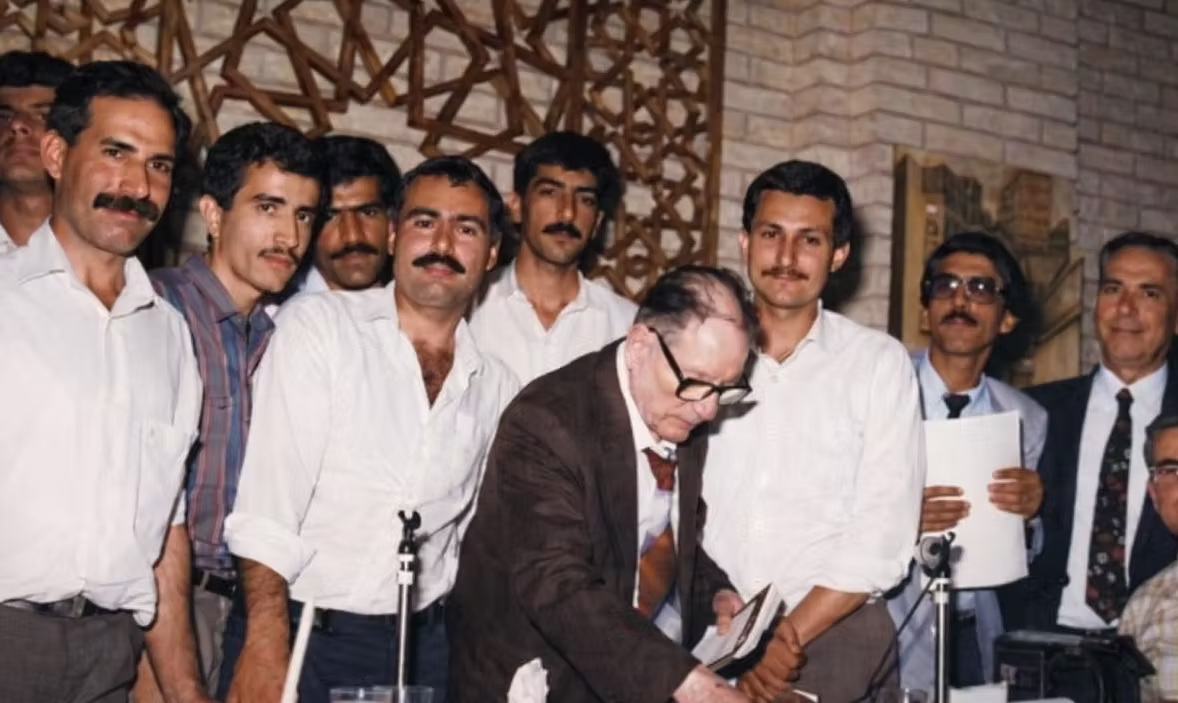
After issuing the supplementary volume to the sixth part of Lamhat Ijtima‘iyya min Tarikh al-‘Iraq al-Hadith, Ali Al-Wardi did not continue the remaining installments of the project and did not publish another standalone book. Yet the absence of new major volumes did not signal a retreat from intellectual life.
His activity increasingly took the form of newspaper articles and recorded conversations, many of which appeared in official Iraqi publications, while only occasionally in other outlets. Through these shorter writings, he remained present in public debate, commenting on questions of society, belief, and historical change.
Among the notable appearances from this period were a series of essays published in Al-Tadhamon magazine in London under the title From the Memories of Ali Al-Wardi. In the final fifteen years of his life, he also continued to attend cultural gatherings in Baghdad and, from time to time, delivered lectures on a variety of intellectual and social themes.
The continuity of his influence lay not only in new writing but in the enduring return of readers to his earlier works. His ideas remained active, debated, and rediscovered, confirming his place as a reference point within modern Iraqi thought. In recognition of this extended presence, his articles and interviews spanning the years 1944 to 1995 have been gathered and published, preserving a record of dialogue between the sociologist and the society he sought to understand.
Published Works
An Iraqi sociologist, and one of the most prominent Arab thinkers of the twentieth century.
والعالم العربي.
pioneers of sociology in Iraq and the Arab world.